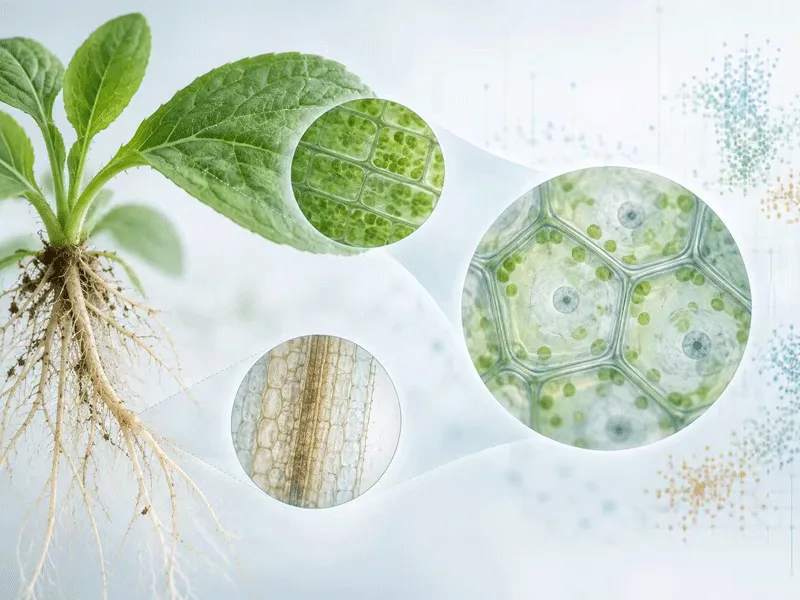
Plant single-cell RNA sequencing can reveal cell identities, developmental trajectories, and tissue-specific responses that are obscured in bulk RNA-seq. In plants, however, the quality of the biological insight depends heavily on how cells are released from the tissue. Rigid and chemically diverse cell walls make some samples difficult to dissociate, while prolonged processing can alter the transcriptome before cells are captured.
FX-Cell is a fixation-first workflow developed to extend plant single-cell RNA sequencing to difficult-to-digest and cryopreserved samples. Published in Nature Methods in 2025, the method and its derivatives combine fixation, optimized cell-wall digestion, and RNA protection. Omics Empower offers FX-Cell-based plant single-cell RNA-seq as part of an end-to-end service that includes sample feasibility assessment, cell preparation, library construction, sequencing, and optional bioinformatics analysis.
*Omics Empower is the officially designated exclusive service provider for FX-Cell, offering end-to-end support for plant single-cell RNA sequencing projects worldwide.
Plant single-cell RNA sequencing can resolve cellular diversity across complex plant tissues.
Most plant scRNA-seq workflows begin by removing the cell wall to generate protoplasts. The enzyme mixture, incubation time, temperature, tissue composition, and mechanical handling all affect which cells are recovered. Mature, lignified, waxy, or metabolite-rich tissues can be particularly difficult to process.
Dissociation is not only a cell-recovery problem. Wounding and prolonged enzymatic treatment can induce transcriptional responses during sample preparation. Stress-related genes, including genes associated with wound, jasmonate, and ethylene responses, may increase while the tissue is being processed. The resulting expression profile can therefore contain both the biological signal of interest and a technical response to dissociation.
This issue is especially important when the study itself examines acute stress, injury, defense, or environmental responses. A sample-preparation effect that overlaps with the pathway under investigation can complicate downstream interpretation. Plant single-cell best-practice guidance consequently recommends documenting dissociation conditions, minimizing avoidable processing differences, using biological replicates, and considering protoplasting-related signatures during quality control and analysis.
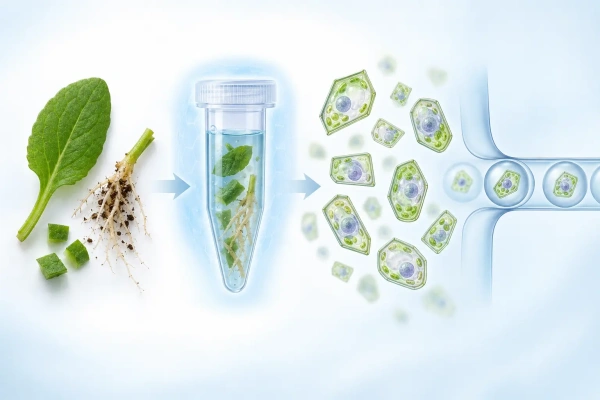
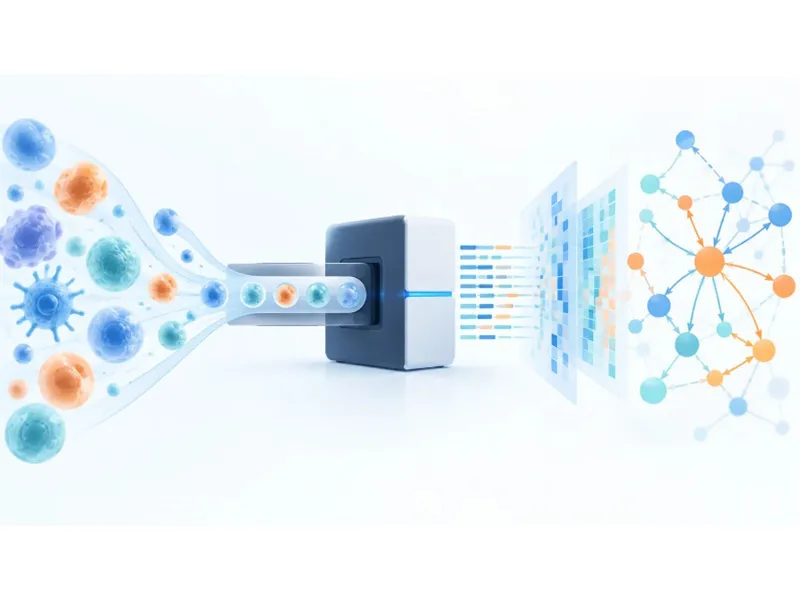
Conceptual overview of fixation-first plant tissue processing and single-cell preparation.
FX-Cell changes the order of sample preparation. Plant material is fixed before extended enzymatic digestion, helping preserve the transcriptional state closer to the time of collection. The fixed tissue can then undergo optimized digestion, including conditions that would be difficult to apply to unfixed living cells.
The published method includes three related workflows.
· FX-Cell is designed for difficult-to-digest plant tissues processed through a fixation-first workflow.
· FXcryo-Cell and cryoFX-Cell extend the approach to cryopreserved material and collection settings where immediate protoplast preparation is impractical.
· The workflow includes measures intended to limit RNA degradation while cell walls are digested and individual cells are released.
In the original study, the authors applied these approaches to difficult or cryopreserved tissues and constructed cell atlases for rice tiller nodes, wild-rice rhizomes, and field-grown maize crown roots. They also used the method to profile acute wound responses in Arabidopsis thaliana leaves.
Fixation-first processing should not be described as eliminating every source of bias. Cell recovery can still vary by species, tissue, developmental stage, genotype, treatment, storage history, and reference quality. The value of FX-Cell is that it expands the set of plant samples that can be considered for whole-cell transcriptomic profiling and provides an alternative when conventional protoplast isolation is inefficient or operationally impractical.
Omics Empower's current FX-Cell project experience spans 63 plant species and 41 tissue or sample categories. The portfolio includes food crops, commercial crops, ornamental plants, medicinal plants, model species, and marine plants. Roots, stems, leaves, flowers, fruits, and seeds have all been represented.
Within this dataset, food crops and commercial crops account for the largest shares of species processed, while leaves, roots, and flowers are the most frequently represented organs. This breadth matters because plant dissociation is highly sample-dependent. Performance established in a young model-organ root cannot automatically be assumed for a mature stem, reproductive structure, seed, or non-model species.
The examples below summarize selected anonymized projects from the service dataset. They are descriptive project outcomes, not guaranteed specifications. Cell recovery and sequencing metrics depend on the sample and study design.
Tissue example | Study scale | Selected observed metrics | Potential research use |
Aquatic plant root | Three biological replicates | Mean 19,224 cells; mean median genes per cell 3,743; more than 53,000 total genes detected per sample | Root cell diversity and environmental response |
Commercial crop root | Eight treatment and control samples | Mean approximately 19,195 cells; reads mapped confidently to the transcriptome ranged from 75% to 81% | Developmental and treatment-response comparisons |
Commercial crop stem | Replicated samples | Mean approximately 18,800 cells with consistent recovery across batches | Meristem activity, vascular differentiation, and secondary growth |
Medicinal plant leaf | Three biological replicates | Mean 18,566 cells; median genes per cell ranged from approximately 1,000 to 1,400 | Cell-type localization of specialized metabolic pathways |
Commercial crop spikelet | Replicated samples | 14,357 to 14,381 cells recovered | Reproductive development and cell-fate studies |
Legume pod | Replicated samples | Mean approximately 18,400 cells; median genes per cell ranged from 1,084 to 1,319 | Pod development, seed development, and stress-associated reproduction |
These examples illustrate why a single quality threshold should not be used across every plant tissue. A useful feasibility review considers expected cell types, tissue composition, biological question, genome annotation, target cell recovery, sequencing depth, and the analysis required to answer the study question.
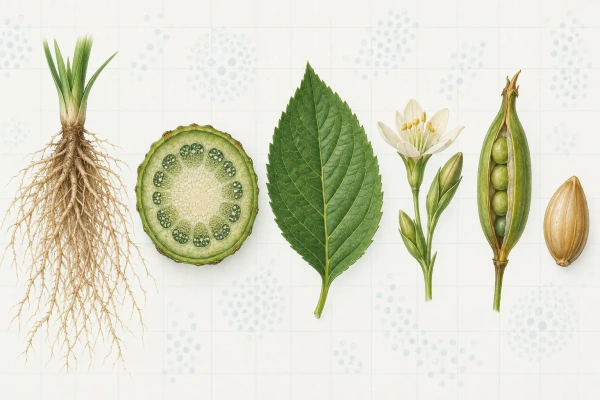
FX-Cell may be considered for diverse plant tissues, subject to sample-specific feasibility assessment.
Mature stems, vascular tissues, lignified organs, waxy leaves, and tissues rich in polysaccharides or secondary metabolites may yield few intact protoplasts under conventional conditions. A fixation-first workflow allows digestion conditions to be optimized without requiring cells to remain viable throughout a prolonged preparation.
Many crop and ecology studies collect material away from a single-cell laboratory. Immediate preparation of fresh protoplasts may be unrealistic when samples come from field trials, greenhouses at another site, or time-sensitive stress experiments. FX-Cell derivatives designed for cryopreserved samples can make collection and batch planning more practical, provided that the collection and storage procedure is agreed before the experiment begins.
Flowers, spikelets, pods, seeds, and embryos contain specialized cell types and can be difficult to dissociate evenly. These samples may benefit from a workflow selected specifically for the species, developmental stage, and target compartment rather than a generic leaf or root protocol.
Medicinal plants and non-model species often combine challenging tissue chemistry with incomplete genome annotation. Successful sequencing is only one part of the project. Reference selection, gene annotation, orthology-based interpretation, and cell-type annotation should be considered before samples are submitted.
Omics Empower provides FX-Cell-based plant single-cell RNA-seq support from early sample assessment through sequencing and bioinformatics analysis. We work with research teams on standard tissues as well as more challenging plant materials, helping them decide whether an FX-Cell workflow or plant snRNA-seq is the more practical starting point.
If you are planning a plant single-cell or spatial transcriptomics study, send us your species, tissue type, collection plan, and research question. We will help you assess feasibility before you start harvesting. Our team has supported more than 500 peer-reviewed publications across single-cell and spatial transcriptomics projects, with end-to-end support from project design to publication-ready results.
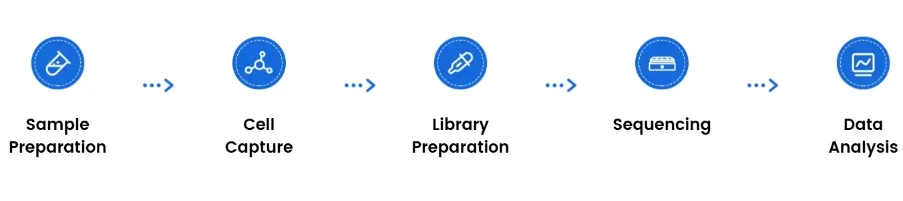
Omics Empower workflow overview
Our team has supported more than 500 peer-reviewed publications across single-cell and spatial transcriptomics research, including studies published in Nature, Science, and Cell.
· A Complete Guide to Single-Nucleus RNA Sequencing (snRNA-seq)
· How Single-Cell RNA-Seq Reveals Neural Organoid Patterning
· Is Cell Subtype Annotation Necessary in Single-Cell RNA Sequencing?
· Cross-Species Cell Type Annotation for Plant scRNA-seq with the OMG Browser
1. Ming X, Wan MC, Zhang ZD, et al. FX-Cell: a method for single-cell RNA sequencing on difficult-to-digest and cryopreserved plant samples. Nature Methods. 2025;22:2551-2562. https://doi.org/10.1038/s41592-025-02900-2
2. Grones C, et al. Best practices for the execution, analysis, and data storage of plant single-cell/nucleus transcriptomics. The Plant Cell. 2024;36:812-828. https://doi.org/10.1093/plcell/koad289
3. Shaw R, Tian X, Xu J. Single-cell transcriptome analysis in plants: advances and challenges. Molecular Plant. 2021;14:115-126. https://doi.org/10.1016/j.molp.2020.10.012
4. Xu M, Du Q, Tian C, et al. Stochastic gene expression drives mesophyll protoplast regeneration. Science Advances. 2021;7:eabg8466. https://doi.org/10.1126/sciadv.abg8466
Germany: Arnold-Graffi-Haus / D85 Robert-Rössle-Straße 10 13125 Berlin
United States: (CA) 2 Goddard, Irvine, CA 92618
United States: (IL) 8255 Lemont Rd, #1, Darien, IL 60561
Hong Kong: Unit 615, Building 11W, Hong Kong Science Park, Pak Shek Kok, Hong Kong
Germany: Arnold-Graffi-Haus / D85 Robert-Rössle-Straße 10 13125 Berlin
United States: (CA) 2 Goddard, Irvine, CA 92618
United States: (IL) 8255 Lemont Rd, #1, Darien, IL 60561
Hong Kong: Unit 615, Building 11W, Hong Kong Science Park, Pak Shek Kok, Hong Kong
Germany: Arnold-Graffi-Haus / D85 Robert-Rössle-Straße 10 13125 Berlin
United States: (CA) 2 Goddard, Irvine, CA 92618
United States: (IL) 8255 Lemont Rd, #1, Darien, IL 60561
Hong Kong: Unit 615, Building 11W, Hong Kong Science Park, Pak Shek Kok, Hong Kong

 EN
EN
 de
de