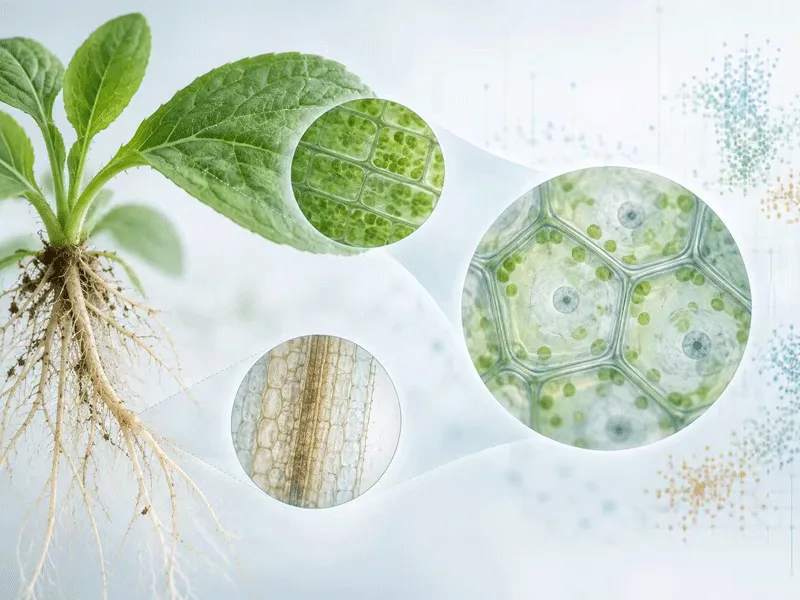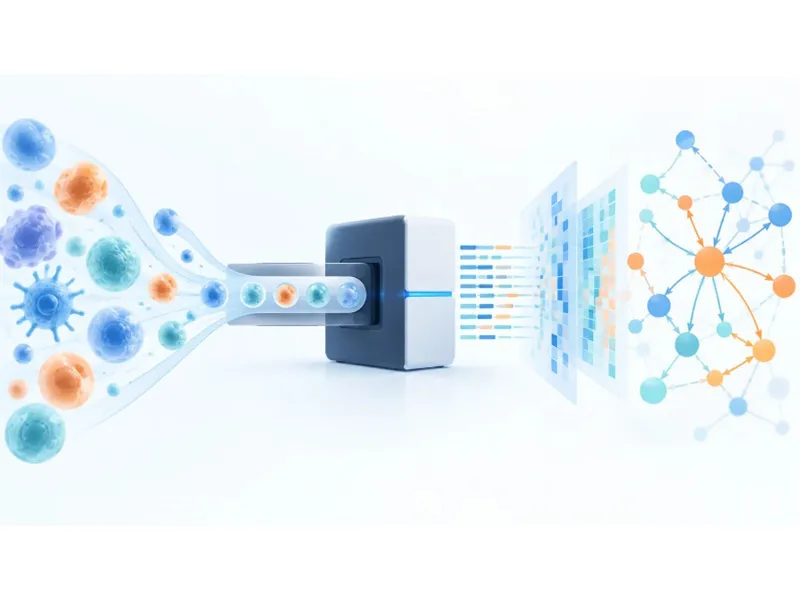
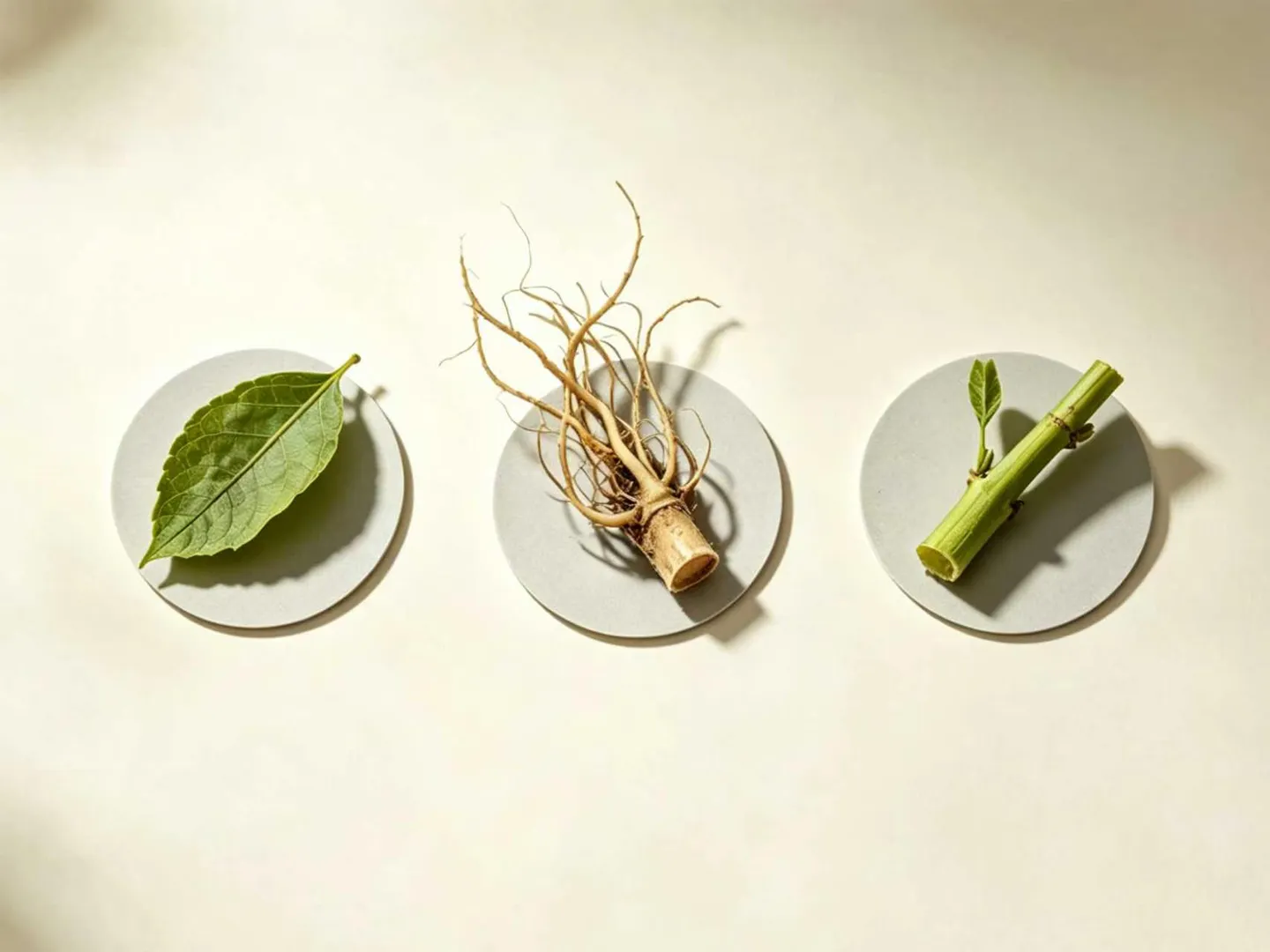
Plant single-cell RNA-seq can reveal how different cell populations respond to development, stress, disease, and environmental change. But in practice, the quality of a project is often decided long before library preparation. The tissue you choose, the way replicates are collected, and the preservation method can all influence what is recovered downstream.
That is why sample planning is particularly important for plant single-cell work. Plant tissues vary widely in cell-wall composition, water content, developmental stage, and metabolite levels. A young root tip and a mature leaf may come from the same plant, but they do not necessarily require the same approach.
FX-Cell gives researchers a practical route for working with a broader range of plant samples, provided the project is planned around the biology of the tissue rather than a one-size-fits-all protocol.
*New to FX-Cell? Read our overview of the FX-Cell workflow for difficult plant samples to learn how it supports plant single-cell RNA-seq from challenging or cryopreserved materials. Omics Empower is the exclusive authorized service provider for FX-Cell technology.
Before we go through specific plant tissues, there are a few critical requirements that must be strictly followed:
Whenever possible, always prioritize young, actively growing tissues.For samples that have undergone biological or environmental treatments, select regions that remain metabolically active and non-senescent.
Each experimental condition should include at least 3–5 biological replicates. Put simply, replication is not optional in practice—while it is acceptable to generate extra samples as backups, an experiment without sufficient replicates is fundamentally incomplete. Once sequencing has been performed, missing replicates cannot be recovered or compensated for retrospectively.
Depending on tissue size, use 2–15 mL centrifuge tubes for collection and processing.Each tube should contain only enough material for a single dissociation reaction (“one tube, one reaction” principle).Avoid repeated freeze–thaw cycles, as they significantly compromise cell integrity and RNA quality.
All samples must be stored at -80°C prior to processing.During shipment, samples must be transported on sufficient dry ice to ensure they remain fully frozen throughout transit.Inadequate cooling or partial thawing can lead to irreversible sample degradation and loss of single-cell resolution.
Method 1: Direct freezing (preferred for field samples)
Fresh tissue → aliquot into 3–5 portions → snap-freeze in liquid nitrogen → store at −80°C → ship on dry ice. No fixation required.
Method 2: Chemical fixation workflow
Fresh tissue → mince → chemical fixation → wash → remove moisture → store at −80°C → ship on dry ice.
Mix absolute ethanol, acetic acid, and water in a volume ratio of 2:1:1, and pre-chill on ice.
Finely chop the tissue into pieces approximately 0.5–1 cm² in size. For samples with a waxy surface or larger tissue types, ensure thorough mincing. Transfer the tissue into a 15 mL centrifuge tube.Add pre-chilled fixative until the tissue is fully submerged. Apply vacuum infiltration until the samples sink to the bottom of the tube and maintain the vacuum for 5 min. For older or more mature tissues, extend this step to 8–10 min as appropriate.Incubate the samples on ice for 30 min.
Remove the fixative by aspiration, then add pre-chilled 0.1× PBS and gently mix. Incubate on ice for 5 min, then discard the supernatant. Repeat the wash step once more (two washes in total).Carefully blot excess buffer from the tissue surface using absorbent paper. Ensure samples are thoroughly dried prior to freezing to prevent ice crystal–induced damage.
For storage, transfer the samples to −80 °C. Once all samples are collected, ship them together on dry ice.
Root tip ≤1 cm; ≥20 roots per sample; avoid elongation zone; 3–5 replicates.
Notes:
The root apical meristem exhibits high mitotic activity and is an ideal source for single-cell dissociation, whereas the elongation zone is highly vacuolated and should be excluded.
Handle samples gently to avoid mechanical damage to root tips.
Basal stem or internodes; ≥200 mg; young tissues preferred; 3–5 replicates.
Notes:
Young stem segments are preferred over mature tissues. Heavily suberized regions should be removed or replaced with secondary tissue when possible.
For hollow or highly hydrated stems, the input amount may be increased to ~300 mg.
If fixation is required, cut tissues into ~2 mm thick slices to ensure adequate penetration of fixative.
Young leaves or buds; 50–100 mg; avoid mature or diseased leaves; 3–5 replicates.
Notes:
Avoid mature or disease-infected leaves.
For fixation, cut into ~0.5–1 cm² fragments. For waxy leaves, vacuum infiltration may be extended to 8–10 min.
Flower buds preferred; ≥100 mg; avoid wilted tissues; 3–5 replicates.
Notes:
Flower buds are preferred over fully opened flowers; avoid wilted or pathogen-infected tissues.
For thin petals, the input amount may be increased to ~150 mg.
Sepals may contain high levels of secondary metabolites and can be removed if necessary.
For fixation, mince whole small flowers or large petals prior to processing.
≥50 mg; rich in phenolics; difficult dissociation; prior consultation recommended.
Notes:
Stamens and anthers are rich in phenolics, pigments, and polysaccharides, and have thick cell walls, making dissociation challenging.
These are considered high-difficulty samples; prior consultation is recommended.
Immature fruits preferred; ≥300 mg; avoid lignified tissues; 3–5 replicates.
Notes:
Prefer immature or semi-mature fruits with active cell division; avoid heavily lignified tissues in mature fruits.
Hard peels should be thoroughly minced.
For fixation, cut into 1–2 mm³ pieces; ensure fixative volume is at least 5× the tissue volume.
Embryo/endosperm from early seeds; ≥50 mg; remove seed coat; 3–5 replicates.
Notes:
Immature seeds are strongly preferred, as mature endosperm cells are often highly starch-rich and difficult to dissociate.
Seed coats should be removed, retaining only embryo or endosperm tissues.
For fixation, dissect tissues into ~1 mm³ pieces; vacuum infiltration may be extended by 2–3 min if needed.
Callus or vascular tissues; ≥200 mg; must be actively growing; consult before submission.
Notes:
Callus should be in the exponential growth phase; avoid aged or browning tissue.
Non-standard tissue types should be discussed with the laboratory in advance due to variability in processing requirements.
A preliminary feasibility review does not need to be complicated. The following information is usually enough for us to give useful advice:
Plant species and cultivar or genotype
Tissue type and developmental stage
Research question and experimental groups
Number of samples and planned biological replicates
Whether material will be fresh, frozen, or fixed
Your collection and shipping timeline
With that information, our team can help you select an appropriate workflow and provide sample-specific guidance on collection, preservation, shipping, library preparation, sequencing, and downstream analysis.
Omics Empower provides FX-Cell-based plant single-cell RNA-seq support from early sample assessment through sequencing and bioinformatics analysis. We work with research teams on standard tissues as well as more challenging plant materials, helping them decide whether an FX-Cell workflow or plant snRNA-seq is the more practical starting point.
If you are planning a plant single-cell or spatial transcriptomics study, send us your species, tissue type, collection plan, and research question. We will help you assess feasibility before you start harvesting. Our team has supported more than 500 peer-reviewed publications across single-cell and spatial transcriptomics projects, with end-to-end support from project design to publication-ready results.
FX-Cell for Plant Single-Cell RNA-Seq: A New Workflow for Difficult Plant Samples
Cross-Species Cell Type Annotation for Plant scRNA-seq with the OMG Browser
Is Cell Subtype Annotation Necessary in Single-Cell RNA Sequencing?
Single-Cell Sequencing in Oncology Drug Development: Key Applications and Research Examples
Germany: Arnold-Graffi-Haus / D85 Robert-Rössle-Straße 10 13125 Berlin
United States: (CA) 2 Goddard, Irvine, CA 92618
United States: (IL) 8255 Lemont Rd, #1, Darien, IL 60561
Hong Kong: Unit 615, Building 11W, Hong Kong Science Park, Pak Shek Kok, Hong Kong
Germany: Arnold-Graffi-Haus / D85 Robert-Rössle-Straße 10 13125 Berlin
United States: (CA) 2 Goddard, Irvine, CA 92618
United States: (IL) 8255 Lemont Rd, #1, Darien, IL 60561
Hong Kong: Unit 615, Building 11W, Hong Kong Science Park, Pak Shek Kok, Hong Kong
Germany: Arnold-Graffi-Haus / D85 Robert-Rössle-Straße 10 13125 Berlin
United States: (CA) 2 Goddard, Irvine, CA 92618
United States: (IL) 8255 Lemont Rd, #1, Darien, IL 60561
Hong Kong: Unit 615, Building 11W, Hong Kong Science Park, Pak Shek Kok, Hong Kong

 EN
EN
 de
de