
Yeast One-Hybrid (Y1H) assays are widely used to study DNA–protein interactions and identify transcription factors that bind to specific DNA elements. In Y1H library screening, the bait sequence is a key factor that can affect screening background, specificity, and final results.
For researchers working with promoter regions, Y1H bait sequence design often raises several practical questions: which promoter fragment should be cloned, which motifs are most relevant, and how can predicted transcription factor binding sites guide bait selection?
Bioinformatics tools and regulatory-element databases can help narrow down candidate bait regions before vector construction and library screening.
A key difference between yeast one-hybrid (Y1H) and yeast two-hybrid (Y2H) library screening systems is that Y1H screening commonly relies on a single reporter gene, AUR1-C. Because of this, self-activation and false-positive background can be relatively more problematic in Y1H assays than in Y2H assays. For this reason, overly long DNA fragments are generally not recommended as bait sequences.
Two strategies are commonly used for Y1H bait sequence selection:
Promoter fragment approach: Select promoter regions where regulatory elements of interest are relatively enriched. In many projects, a 200-300 bp fragment is a practical starting range.
Motif-based approach: Select specific motifs of interest and consider tandem repeats. Three tandem repeats are often used to enhance binding efficiency in screening.
Important note: The inserted bait sequence should not contain BstBI or BbsI restriction enzyme recognition sites, because these sites are required for cloning and vector linearization in the pAbAi system.
Prediction URL: https://fruitfly.org/seq_tools/promoter.html
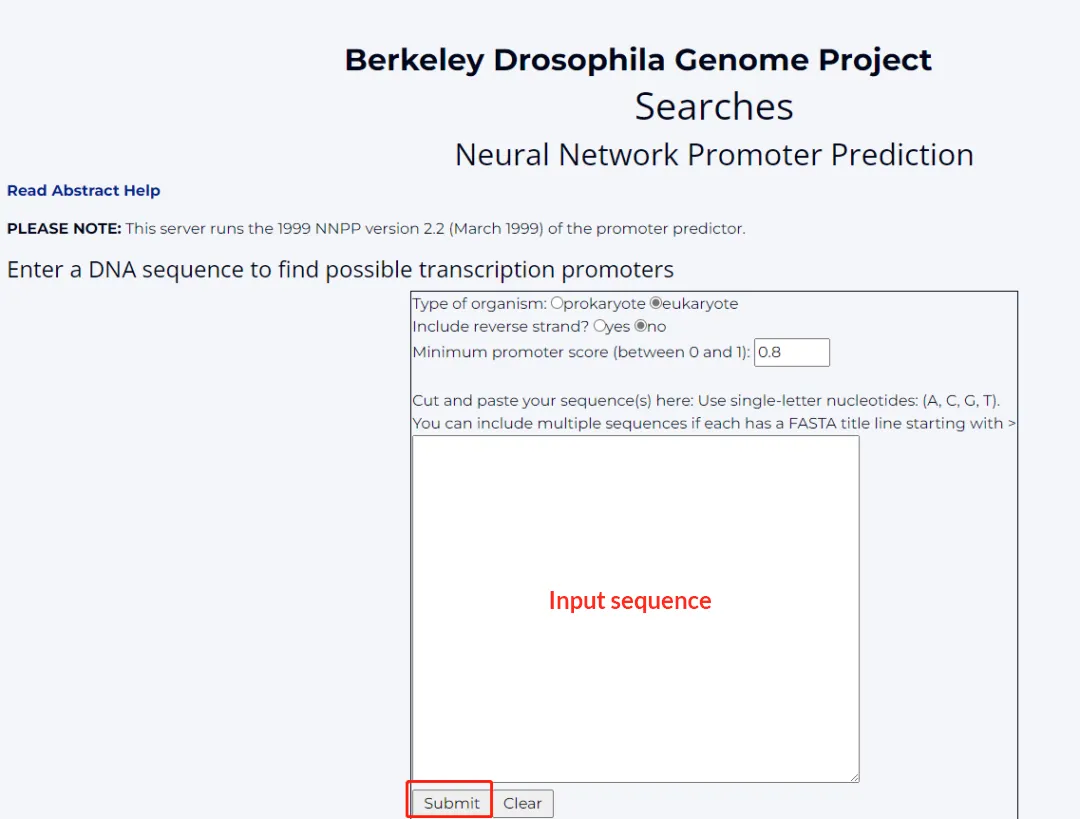
Prediction results:

Prediction URL: http://alggen.lsi.upc.es/cgi-bin/promo_v3/promo/promoinit.cgi?dirDB=TF_8.3
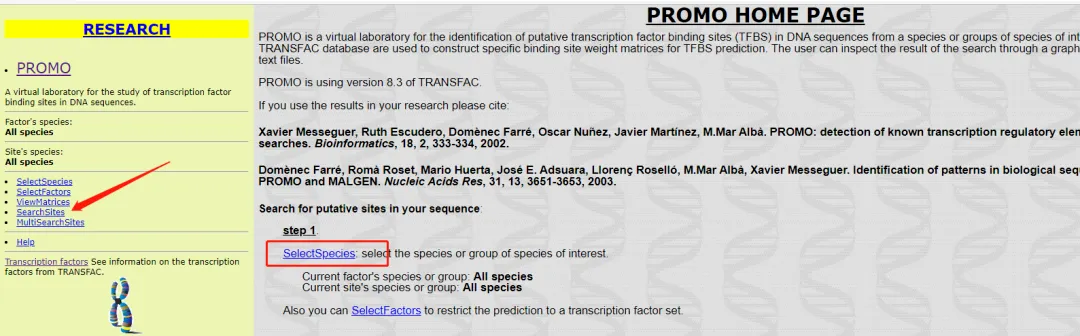
Partial prediction results:
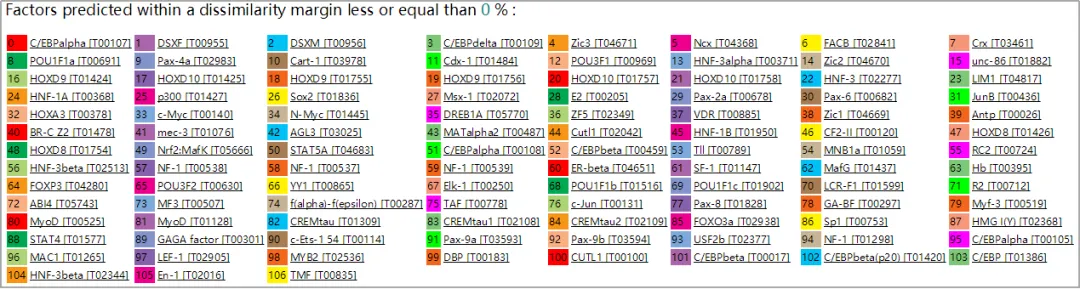
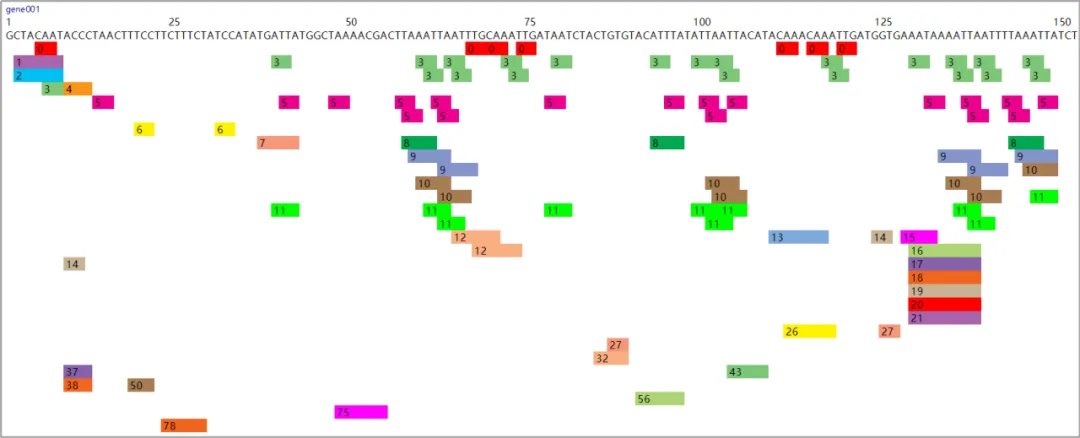
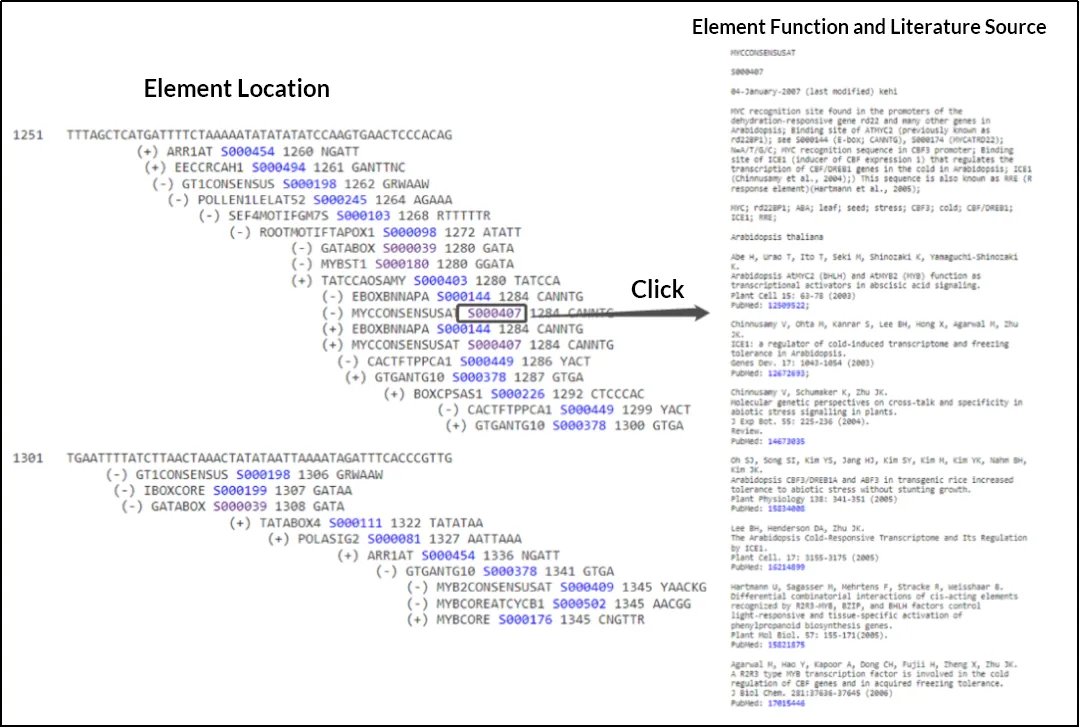
Prediction URL: https://www.dna.affrc.go.jp/PLACE/?action=newplace
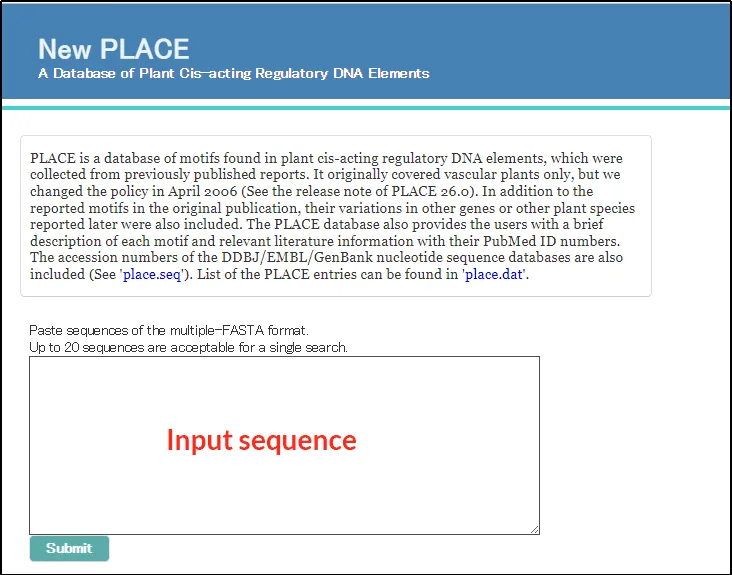
Partial prediction results:
Prediction URL: http://bioinformatics.psb.ugent.be/webtools/plantcare/html/

Partial prediction results:
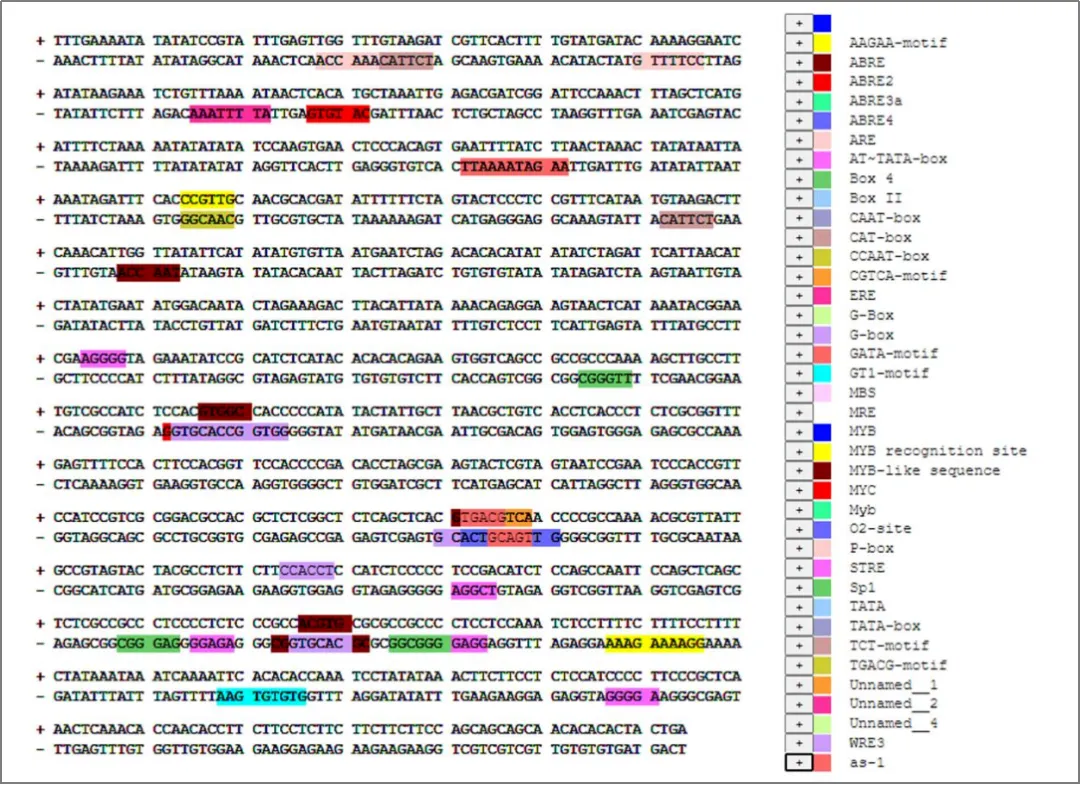
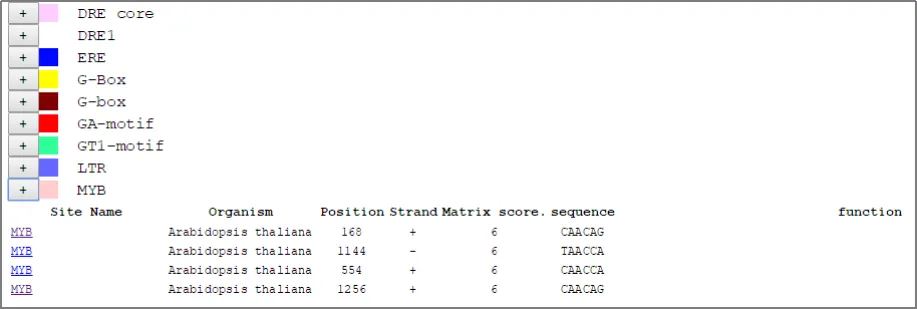
1. The analyses above can be used to identify predicted core promoter regions and transcription factor binding elements within the target sequence.
2. Researchers can combine experimental context with bioinformatics prediction results to select appropriate bait regions, such as binding sites for target transcription factors or specific cis-regulatory elements.
3. If no specific regulatory region of interest has been defined, the core promoter region, especially sequences surrounding the transcription start site, may be considered as an alternative bait sequence.
4. The pAbAi single-hybrid bait vector is an integrative vector and must be linearized before transformation into the Y1HGold yeast strain. The fixed restriction enzyme sites are BstBI (TT↓CGAA) or BbsI (GAAGAC(2/6)^/). During vector construction, the inserted sequence should not contain these restriction sites.
5. The empty pAbAi vector can exhibit self-activation. When constructing the bait vector, the 5' insertion site should be selected upstream of the MCS SmaI site, while the 3' end can use either SalI or XhoI.
6. Because Y1H systems typically contain only a single reporter gene, self-activation may occur more frequently than in Y2H systems. When promoter fragments are used as bait, it is often useful to divide the promoter into two or three segments and construct separate bait vectors for background screening. The final bait region can then be selected based on self-activation results and regulatory-element distribution before library screening.
At Omics Empower, we provide end-to-end yeast hybrid solutions, including Yeast One-Hybrid (Y1H), Yeast Two-Hybrid (Y2H), and custom library construction and screening. Our platform enables researchers to systematically study DNA–protein interactions and protein–protein interactions, supporting discoveries in gene regulation and molecular biology.
Backed by more than a decade of expertise, our yeast library platform has already supported 200+ customer publications, including high-impact studies featured on the covers of Science and Cell. This track record demonstrates both the reliability of our data and the trust placed in our services by the scientific community.
Contact our team today to discuss your research needs and explore how our yeast library and screening services can help drive your next research.
If you are planning a Yeast Library project, these related articles may help you better understand library construction strategies, variant design considerations, and screening approaches, helping you build a streamlined workflow aligned with your research goals:
Germany: Arnold-Graffi-Haus / D85 Robert-Rössle-Straße 10 13125 Berlin
United States: (CA) 2 Goddard, Irvine, CA 92618
United States: (IL) 8255 Lemont Rd, #1, Darien, IL 60561
Hong Kong: Unit 615, Building 11W, Hong Kong Science Park, Pak Shek Kok, Hong Kong
Germany: Arnold-Graffi-Haus / D85 Robert-Rössle-Straße 10 13125 Berlin
United States: (CA) 2 Goddard, Irvine, CA 92618
United States: (IL) 8255 Lemont Rd, #1, Darien, IL 60561
Hong Kong: Unit 615, Building 11W, Hong Kong Science Park, Pak Shek Kok, Hong Kong
Germany: Arnold-Graffi-Haus / D85 Robert-Rössle-Straße 10 13125 Berlin
United States: (CA) 2 Goddard, Irvine, CA 92618
United States: (IL) 8255 Lemont Rd, #1, Darien, IL 60561
Hong Kong: Unit 615, Building 11W, Hong Kong Science Park, Pak Shek Kok, Hong Kong

 EN
EN
 de
de