Choosing between single-cell RNA sequencing (scRNA-seq) and single-nucleus RNA sequencing (snRNA-seq) is one of the most consequential design decisions in a single-cell transcriptomics project.
Both approaches profile gene expression at cellular resolution and reveal heterogeneity within complex tissue. However, they begin with different biological materials and are affected by different technical biases. The right option depends on sample condition, tissue architecture, the cell populations of interest, and the biological question.
At Omics Empower, we support scRNA-seq and snRNA-seq projects from sample feasibility assessment and workflow selection to sequencing and bioinformatics. This guide compares the two approaches and helps researchers identify the better fit for their samples and study objectives.
The central difference is the material being sequenced:
scRNA-seq profiles RNA from intact, dissociated single cells. It captures both nuclear and cytoplasmic RNA.
snRNA-seq profiles RNA from isolated nuclei. Nuclear RNA includes mature transcripts as well as nascent and unspliced RNA, so intronic reads are commonly retained during analysis.
That distinction affects sample compatibility, transcript coverage, cell recovery, quality-control strategy, and interpretation of downstream results.
Feature | scRNA-seq | snRNA-seq |
Starting material | Intact single cells | Isolated nuclei |
RNA represented | Nuclear and cytoplasmic RNA | Primarily nuclear RNA, including pre-mRNA |
Sample condition | Best suited to fresh, viable material | Often well suited to frozen, archived, or clinically collected tissue |
Dissociation sensitivity | Higher; cell loss and stress signals may be introduced during processing | Less sensitive to whole-cell dissociation, although nuclei isolation can still introduce bias |
Often challenging | Large, fragile, lipid-rich, or highly interconnected cells | Some low-RNA populations and cytoplasm-dependent signals |
Common analytic consideration | Exonic reads are typically the primary focus | Exonic and intronic reads are commonly included |
scRNA-seq is often preferred when high-quality fresh tissue or viable cells are available and the project requires a broader view of the cellular transcriptome.
It is particularly useful when researchers need:
Stronger representation of cytoplasmic transcripts
Live-cell enrichment or sorting before sequencing
Cell-surface protein profiling, including CITE-seq workflows
Immune repertoire profiling, including paired TCR or BCR sequencing
Closer evaluation of mitochondrial or other cytoplasm-associated transcriptional signals
For fresh samples that can be dissociated efficiently, scRNA-seq can offer rich transcriptomic information and strong resolution of cell states. The key requirement is a tissue dissociation workflow that preserves viability while minimizing stress-induced transcriptional changes and selective cell loss.
snRNA-seq is often the more practical option when intact cell recovery is difficult or when tissue cannot be processed immediately after collection.
It is commonly considered for:
Frozen, biobanked, or archived tissue
Clinical samples with limited processing flexibility
Adult brain and nervous tissue
Skeletal muscle and cardiac tissue
Liver, adipose tissue, and other samples containing large or fragile cells
Fibrotic, structurally complex, or difficult-to-dissociate tissue
Studies where dissociation-associated stress is a material concern
Because nuclei can be isolated from frozen tissue, snRNA-seq is particularly valuable for retrospective studies and clinical collections. It can also improve access to cell types that are large, highly connected, fragile, or otherwise difficult to recover intact in standard droplet-based workflows.
Important nuance
snRNA-seq should not be treated as a universal replacement for scRNA-seq. Nuclear RNA does not fully represent the cytoplasmic transcriptome, and different nuclei isolation methods can alter the relative representation of cell populations.
snRNA-seq is frequently used for adult, frozen, or post-mortem brain samples because neurons are large, highly connected, and difficult to recover as intact cells. For freshly collected tissue, scRNA-seq may still be appropriate when viable cell sorting, immune profiling, or other live-cell workflows are central to the project.
snRNA-seq is commonly used for mature skeletal muscle and cardiac tissue because muscle fibers and cardiomyocytes are structurally complex and difficult to capture as intact single cells. Nuclei-based profiling can also be useful for studying transcriptional heterogeneity within multinucleated cells.
Large hepatocytes and lipid-rich adipocytes can be difficult to recover efficiently in standard single-cell workflows. snRNA-seq is often a practical option, particularly for frozen samples. Optimized scRNA-seq workflows may remain useful when the research focus is on stromal, endothelial, or immune cell populations.
Both workflows can be informative in kidney research. snRNA-seq is often well suited to frozen biopsies and may help reduce loss of dissociation-sensitive cell types. Fresh scRNA-seq can provide broader cytoplasmic RNA coverage when handling time, tissue quantity, and dissociation conditions can be tightly controlled.
For fresh tumors, scRNA-seq is often advantageous when viable immune cells, tumor-infiltrating lymphocytes, or cell-surface protein information are important. For frozen tumors, archived specimens, or fibrotic tissue that is difficult to dissociate, snRNA-seq may offer a more feasible route to transcriptomic profiling.
scRNA-seq and snRNA-seq datasets should not be interpreted as identical. The distinction between whole-cell and nuclear RNA changes both the underlying signal and the analysis strategy.
snRNA-seq datasets commonly contain more intronic reads because nuclei retain nascent and unspliced RNA.
scRNA-seq may provide broader representation of cytoplasmic transcripts, but is more exposed to viability loss and dissociation-associated artifacts.
Cell-type proportions can differ across the two workflows because recovery bias is not the same.
Quality-control metrics, normalization choices, and differential expression results should be interpreted in the context of the selected workflow.
For that reason, direct comparisons of gene detection rates, mitochondrial RNA proportions, and differential expression results across scRNA-seq and snRNA-seq should be made cautiously. Where a sample is limited or irreplaceable, a feasibility assessment or matched pilot can reduce risk before a larger study begins.
scRNA-seq may be the better option when:
Fresh, viable samples are available
The tissue can be dissociated efficiently
Cytoplasmic RNA coverage is important
The project includes immune repertoire, cell-surface protein, or live-cell enrichment workflows
snRNA-seq may be the better option when:
Tissue is frozen, archived, or clinically collected
Intact cell recovery is difficult
The sample contains large, fragile, or highly interconnected cells
Minimizing whole-cell dissociation-associated stress is a priority
The study involves brain, muscle, adipose tissue, fibrotic tumors, or similarly challenging tissue
scRNA-seq and snRNA-seq are complementary technologies. scRNA-seq is generally most useful for fresh, viable samples and studies requiring broader cytoplasmic RNA coverage or live-cell-dependent applications. snRNA-seq is often the stronger choice for frozen, archived, difficult-to-dissociate, or structurally complex tissue samples.
The best workflow is determined by the condition of the sample, the target cell populations, and the biological question—not simply by which method is most commonly used for a given tissue type.
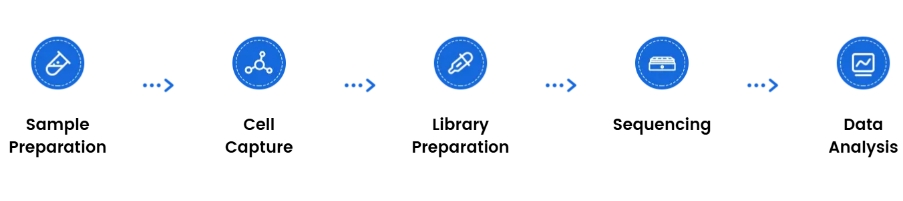
Omics Empower supports researchers with single-cell and single-nucleus RNA sequencing workflows, from sample feasibility assessment and experimental design to library preparation, sequencing, bioinformatics, and publication-ready data visualization.
Our team has supported more than 500 peer-reviewed publications across single-cell and spatial transcriptomics research, including studies published in Nature, Science, and Cell。
Whether you are working with fresh cells, fresh tissue, frozen samples, or clinically collected material, we can help assess the most suitable workflow for your project.
· Comparing Single-Cell Sequencing Platforms: How to Choose the Right Fit for Your Study
· A Complete Guide to Single-Nucleus RNA Sequencing (snRNA-seq)
· Single-Cell Sequencing in Oncology Drug Development: Key Applications and Research Examples
· How Single-Cell RNA-Seq Reveals Neural Organoid Patterning
Germany: Arnold-Graffi-Haus / D85 Robert-Rössle-Straße 10 13125 Berlin
United States: (CA) 2 Goddard, Irvine, CA 92618
United States: (IL) 8255 Lemont Rd, #1, Darien, IL 60561
Hong Kong: Unit 615, Building 11W, Hong Kong Science Park, Pak Shek Kok, Hong Kong
Germany: Arnold-Graffi-Haus / D85 Robert-Rössle-Straße 10 13125 Berlin
United States: (CA) 2 Goddard, Irvine, CA 92618
United States: (IL) 8255 Lemont Rd, #1, Darien, IL 60561
Hong Kong: Unit 615, Building 11W, Hong Kong Science Park, Pak Shek Kok, Hong Kong
Germany: Arnold-Graffi-Haus / D85 Robert-Rössle-Straße 10 13125 Berlin
United States: (CA) 2 Goddard, Irvine, CA 92618
United States: (IL) 8255 Lemont Rd, #1, Darien, IL 60561
Hong Kong: Unit 615, Building 11W, Hong Kong Science Park, Pak Shek Kok, Hong Kong

 EN
EN
 de
de