EN
EN
 de
de 








Single-cell sequencing can be used to profile the tumor microenvironment, identify treatment-responsive or resistant cell populations, track immune cell dynamics, discover biomarkers, and compare preclinical models with patient tumors.


Single-cell sequencing has become an increasingly important tool in oncology drug development. By profiling individual cells rather than averaging signals across bulk tumor tissue, single-cell approaches allow researchers to examine tumor cells, immune cells, stromal cells, myeloid cells, and other components of the tumor microenvironment at higher resolution.
This is especially valuable in cancer therapy research, where drug response is often shaped by rare cell populations, resistant clones, immune-cell states, or treatment-induced changes that may be missed by bulk sequencing. Single-cell and related high-dimensional technologies can help evaluate how the tumor microenvironment changes before and after treatment, identify resistant cell states, reveal key pathways and genes, and support the design of combination therapies.
Below are representative studies showing how single-cell sequencing and related approaches have been applied across oncology drug development.
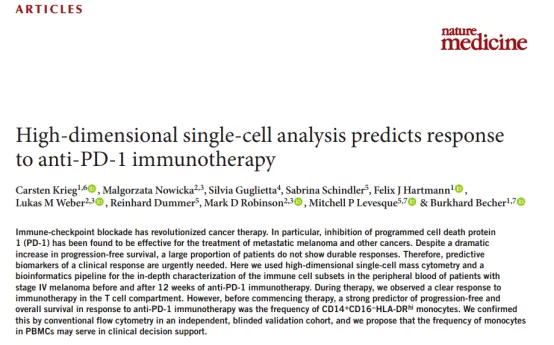
Representative study: Krieg et al., Nature Medicine, 2018
DOI: 10.1038/nm.4466
One important application of single-cell analysis is predicting which patients are more likely to respond to immunotherapy. In this study, Krieg et al. used high-dimensional single-cell mass cytometry to analyze immune cell populations in peripheral blood from patients with melanoma receiving anti-PD-1 therapy.
The study found that the abundance of classical monocytes before treatment was associated with clinical response to PD-1 blockade. Although this study used mass cytometry rather than scRNA-seq, it demonstrates the value of single-cell-level immune profiling for identifying response-associated immune features.
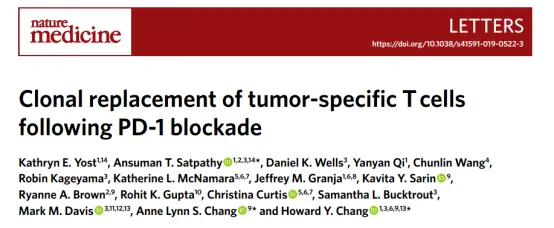
Representative study: Yost et al., Nature Medicine, 2019
DOI: 10.1038/s41591-019-0522-3
Immune checkpoint blockade can reshape the tumor immune microenvironment, but the underlying T cell dynamics are not always clear from bulk-level analysis. Yost et al. used single-cell TCR sequencing to study tumor-specific T cells in patients with basal cell carcinoma and squamous cell carcinoma before and after PD-1 blockade.
The study showed that PD-1 blockade was associated with the emergence and infiltration of new tumor-reactive T cell clones, rather than only the reinvigoration of pre-existing exhausted T cells.
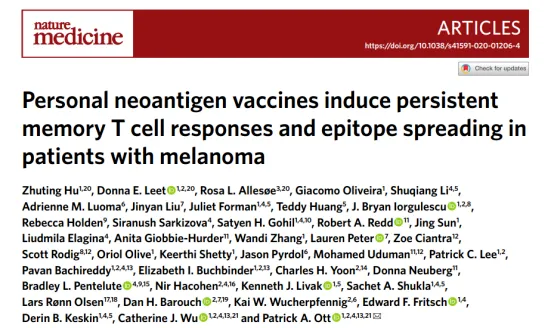
Representative study: Hu et al., Nature Medicine, 2021
DOI: 10.1038/s41591-020-01206-4
Personalized cancer vaccines are designed to activate tumor-specific immune responses. In this study, Hu et al. investigated immune and genomic changes in melanoma patients receiving the NeoVax personalized neoantigen vaccine. Using whole-exome sequencing and RNA sequencing, the researchers characterized tumor mutation profiles and immune responses before and after vaccination.
The study showed that NeoVax induced durable neoantigen-specific T cell responses and also promoted epitope spreading, where immune recognition extended to additional melanoma-associated antigens.
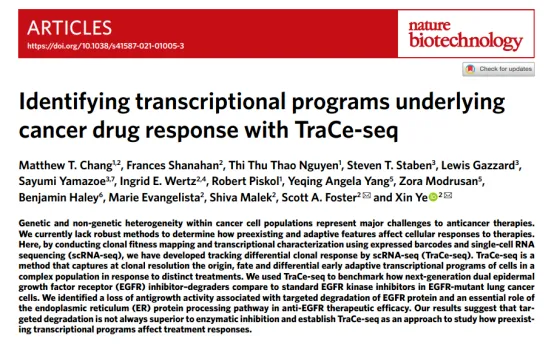
Representative study: Chang et al., Nature Biotechnology, 2021
DOI: 10.1038/s41587-021-01005-3
Drug response is rarely uniform across all tumor cells. Some cells respond to treatment, while others survive and later contribute to relapse. Chang et al. developed TraCe-seq, a method that combines lineage tracing with single-cell transcriptomic profiling, to study how tumor cells respond to targeted therapy.
In EGFR inhibitor models, TraCe-seq allowed researchers to distinguish responsive and resistant tumor cell states. The study found that endoplasmic reticulum stress induced by inhibitor-bound EGFR was important for achieving full therapeutic response.
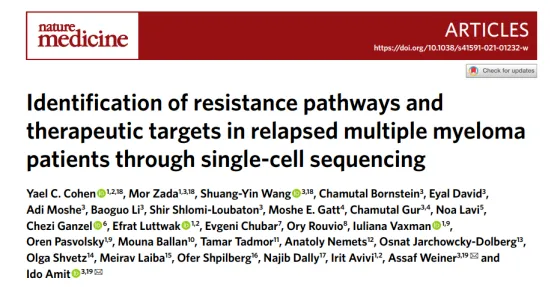
Representative study: Cohen et al., Nature Medicine, 2021
DOI: 10.1038/s41591-021-01232-w
Drug resistance remains one of the major challenges in oncology. In relapsed multiple myeloma, Cohen et al. used MARS-seq single-cell profiling to investigate resistance pathways in patients who no longer responded to bortezomib.
By scoring differentially expressed pathways, the study identified peptidyl-prolyl isomerase A (PPIA), a key enzyme involved in protein folding, as a potential therapeutic target. Further validation showed that CRISPR-Cas9 knockout of PPIA or pharmacological inhibition with cyclosporine could restore sensitivity to proteasome inhibitors in myeloma cells.
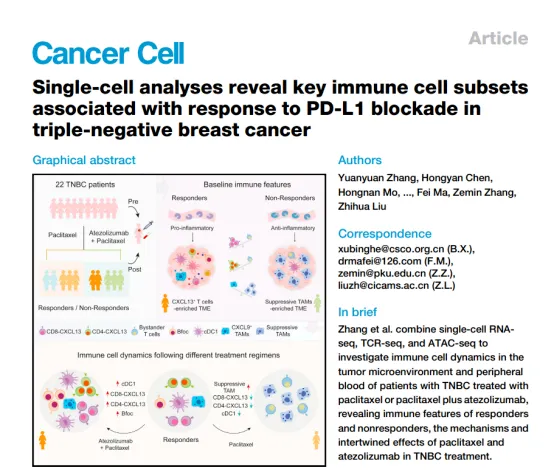
In triple-negative breast cancer, response to immunotherapy varies widely among patients. Zhang et al. performed 10x Genomics-based single-cell transcriptomic profiling on paired pre- and post-treatment samples from patients with triple-negative breast cancer. The study included patients treated with atezolizumab plus paclitaxel and patients treated with paclitaxel alone.
By integrating scRNA-seq, TCR sequencing, and scATAC-seq, the researchers constructed a high-resolution immune atlas of the tumor microenvironment and peripheral blood. They found that enrichment of CXCL13-positive CD8+ and CD4+ T cell subsets in the tumor microenvironment was associated with better response to combination therapy.
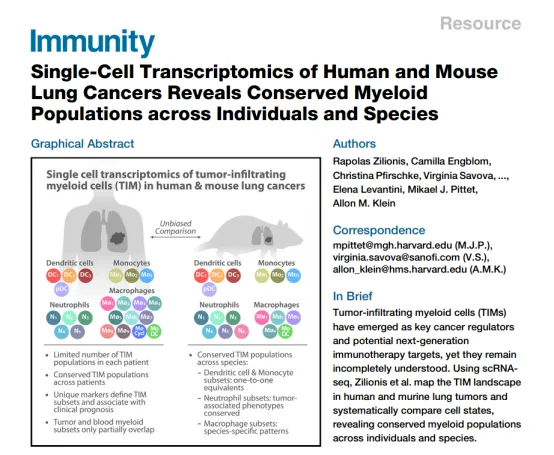
Representative study: Zilionis et al., Immunity, 2019
DOI: 10.1016/j.immuni.2019.03.009
Preclinical animal models are widely used in oncology drug development, but they do not always reproduce the immune and microenvironmental features of human tumors. This is particularly important in immuno-oncology, where differences between human and mouse immune systems may affect translational relevance.
Zilionis et al. used inDrop single-cell RNA sequencing to analyze myeloid cells from patients with non-small cell lung cancer, mouse lung cancer models, and healthy mouse lungs. The study identified monocyte and dendritic cell subsets that were conserved across humans and mice, while macrophage populations showed more substantial species-specific differences.
Together, these studies show that single-cell sequencing can support multiple stages of oncology drug development, including immunotherapy evaluation, drug-response analysis, resistance mechanism discovery, biomarker development, and preclinical model assessment.
For oncology projects, single-cell sequencing can help answer practical research questions such as:
Which immune cell populations are associated with response or resistance?
Do tumor-reactive T cell clones expand after treatment?
Are resistant cells pre-existing or induced by therapy?
Which transcriptional programs are activated in surviving tumor cells?
Which preclinical models best resemble the human tumor microenvironment?
Which biomarkers or therapeutic targets should be prioritized for validation?
The right workflow depends on the research goal. scRNA-seq is useful for profiling tumor and immune cell states; single-cell TCR/BCR sequencing can track immune clonality; scATAC-seq can reveal regulatory programs; and spatial transcriptomics can show where key cell populations are located within the tissue context.
If you are planning a single-cell sequencing project, Omics Empower can support your research with professional single-cell sequencing services.

Researchers worldwide trust our data: more than 500 peer-reviewed publications have been generated using our single-cell and spatial transcriptomics services, including studies in Nature, Science, and Cell. From library preparation to bioinformatics and publication-ready figures, we deliver end-to-end support to help you advance your next single-cell project.
If you are planning a single-cell sequencing project, these articles may help you evaluate cell sorting strategies, compare platform options, and optimize your experimental workflow from sample preparation to downstream analysis:
A Complete Guide to Single-Nucleus RNA Sequencing (snRNA-seq)
How to Use Flow Cytometry (FACS) Effectively for Single-Cell Sequencing
Is Cell Subtype Annotation Necessary in Single-Cell RNA Sequencing?
Krieg et al. High-dimensional single-cell analysis predicts response to anti-PD-1 immunotherapy. Nature Medicine. DOI: 10.1038/nm.4466
Yost et al. Clonal replacement of tumor-specific T cells following PD-1 blockade. Nature Medicine. DOI: 10.1038/s41591-019-0522-3
Hu et al. Personal neoantigen vaccines induce persistent memory T cell responses and epitope spreading in patients with melanoma. Nature Medicine. DOI: 10.1038/s41591-020-01206-4
Chang et al. Identifying transcriptional programs underlying cancer drug response with TraCe-seq. Nature Biotechnology. DOI: 10.1038/s41587-021-01005-3
Cohen et al. Identification of resistance pathways and therapeutic targets in relapsed multiple myeloma patients through single-cell sequencing. Nature Medicine. DOI: 10.1038/s41591-021-01232-w
Zhang et al. Single-cell analyses reveal key immune cell subsets associated with response to PD-L1 blockade in triple-negative breast cancer. Cancer Cell. DOI: 10.1016/j.ccell.2021.09.010
Zilionis et al. Single-Cell Transcriptomics of Human and Mouse Lung Cancers Reveals Conserved Myeloid Populations across Individuals and Species. Immunity. DOI: 10.1016/j.immuni.2019.03.009
Single-cell sequencing can be used to profile the tumor microenvironment, identify treatment-responsive or resistant cell populations, track immune cell dynamics, discover biomarkers, and compare preclinical models with patient tumors.
Germany: Arnold-Graffi-Haus / D85 Robert-Rössle-Straße 10 13125 Berlin
United States: (CA) 2 Goddard, Irvine, CA 92618
United States: (IL) 8255 Lemont Rd, #1, Darien, IL 60561
Hong Kong: Unit 615, Building 11W, Hong Kong Science Park, Pak Shek Kok, Hong Kong
Germany: Arnold-Graffi-Haus / D85 Robert-Rössle-Straße 10 13125 Berlin
United States: (CA) 2 Goddard, Irvine, CA 92618
United States: (IL) 8255 Lemont Rd, #1, Darien, IL 60561
Hong Kong: Unit 615, Building 11W, Hong Kong Science Park, Pak Shek Kok, Hong Kong
Germany: Arnold-Graffi-Haus / D85 Robert-Rössle-Straße 10 13125 Berlin
United States: (CA) 2 Goddard, Irvine, CA 92618
United States: (IL) 8255 Lemont Rd, #1, Darien, IL 60561
Hong Kong: Unit 615, Building 11W, Hong Kong Science Park, Pak Shek Kok, Hong Kong