

The brain is the most complex organ in the central nervous system and the foundation of cognition, memory, language, emotion, and other higher-order functions. Yet despite major progress in neuroscience, many brain-related diseases still lack effective treatment options.
To move beyond bulk-level signals and uncover disease biology at higher resolution, researchers are increasingly turning to single-cell RNA sequencing (scRNA-seq) and spatial transcriptomics. These technologies make it possible to profile cellular heterogeneity, identify disease-associated cell states, characterize immune and glial microenvironments, and preserve tissue context for spatially resolved analysis.
At Omics Empower, we have supported multiple brain-related research projects with single-cell sequencing and spatial transcriptomics services. The four examples below are published customer case studies that demonstrate how these approaches can be applied to real research questions in neuro-oncology, stroke research, neurodegeneration, and neurodevelopment.
Brain tissue is highly heterogeneous, and bulk-level methods often miss important cell-type-specific signals. Single-cell RNA-seq helps resolve cellular heterogeneity, immune/glial states, and disease-associated molecular programs, while spatial transcriptomics preserves tissue architecture and reveals where these signals are located in the brain.
Together, these approaches help researchers study brain diseases and development with higher biological resolution—and choose a transcriptomics strategy that better matches their research goals.
Publication Title
Single-Cell Transcriptomics of Glioblastoma Reveals a Unique Tumor Microenvironment and Potential Immunotherapeutic Target Against Tumor-Associated Macrophage
Journal: Frontiers in Oncology
Impact Factor: 5.738
DOI: 10.3389/fonc.2021.710695
Study Material: 9 human glioma tissue samples
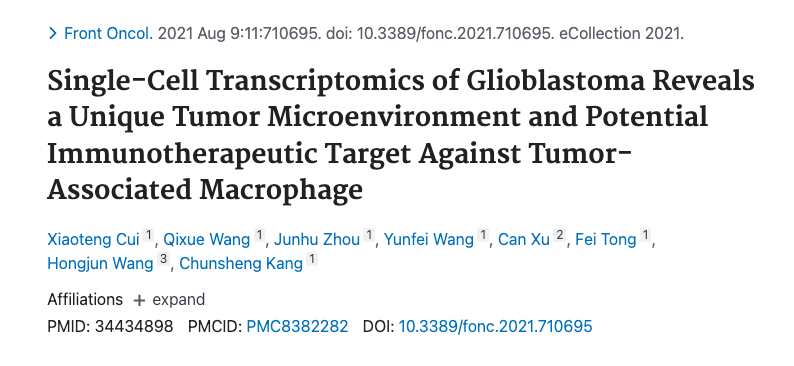
This study analyzed scRNA-seq data from glioblastoma (GBM) samples to investigate tumor-associated macrophages (TAMs) in the tumor microenvironment. The authors identified subtype-specific TAM compositions and features, and used SCENIC analysis to detect key transcription factors.
By validating results in the TCGA-GBM dataset, they showed that SPI1 expression correlated with macrophage infiltration, supporting SPI1 as a potential regulator of TAM maturation/polarization and a possible immunotherapy target.
This case shows how scRNA-seq can support brain tumor microenvironment profiling, especially for immune-cell characterization and target discovery in GBM and related brain tumor studies.
Publication Title
Stroke subtype-dependent synapse elimination by reactive gliosis in mice
Journal: Nature Communications
Impact Factor: 17.694
DOI: 10.1038/s41467-021-27248-x
Study Material: Brain tissues from healthy, ischemic stroke, and hemorrhagic stroke mice (8 mice per group)

Using mouse models of ischemic and hemorrhagic stroke, the authors investigated how microglia/macrophages and astrocytes contribute to synapse phagocytosis during recovery.
They found subtype-specific differences in glial phagocytic function and showed that inhibiting phagocytosis in certain cell populations improved neurological outcomes depending on stroke subtype. scRNA-seq further revealed differences in astrocyte phagocytic programs across the two models.
This study highlights how single-cell RNA-seq helps resolve cell-type-specific responses in brain injury, supporting stroke and neuroinflammation research where subtype and disease stage matter.
Publication Title
Single-cell RNA sequencing reveals B cell–related molecular biomarkers for Alzheimer’s disease
Journal: Experimental and Molecular Medicine
Impact Factor: 12.153
DOI: 10.1038/s12276-021-00714-8
Study Material: PBMCs from 4 AD patients (2 early-stage, 2 late-stage) and 2 healthy controls

The authors performed scRNA-seq on PBMCs and found that B cells were significantly reduced in Alzheimer’s disease (AD) patients. This was validated in a larger cohort by flow cytometry, where reduced B cell abundance correlated with Clinical Dementia Rating (CDR) scores.
In an early-stage AD mouse model, B cell depletion accelerated cognitive impairment and increased amyloid-beta burden. The study also identified disease-associated transcriptional changes in B cells, suggesting potential biomarkers linked to AD severity and progression.
This case shows how single-cell sequencing can support biomarker discovery workflows in neurodegenerative disease research, especially for immune profiling and disease-stage-associated molecular signatures.
Publication Title
Transcriptome-scale spatial gene expression in rat arcuate nucleus during puberty
Journal: Cell and Bioscience
Impact Factor: 9.584
DOI: 10.1186/s13578-022-00745-2
Study Material: Hypothalamus tissues from female SD rats at postnatal days 25, 35, and 45
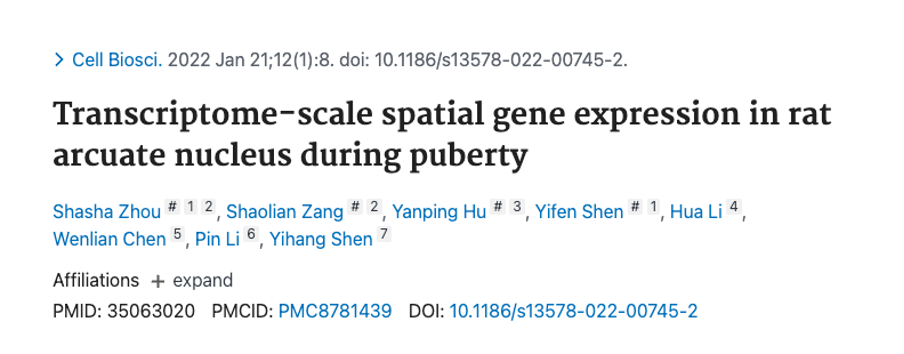
Using the 10x Genomics Visium platform, the authors generated a spatial transcriptomic atlas of the arcuate nucleus (ARC) across pubertal stages.
They identified:
new features of Kiss1+ neurons
four neuronal subclusters with distinct gene-expression patterns
a high-Kiss1-expressing subpopulation that could be isolated using SLC18A3
dynamic gene-expression modules across developmental stages
This case demonstrates how spatial transcriptomics can preserve anatomical context while revealing developmental dynamics, making it especially useful for hypothalamus and other structurally complex brain regions.
These four published customer studies span:
brain tumors (glioblastoma)
stroke and neuroinflammation
neurodevelopment / hypothalamic biology
Taken together, they show how single-cell RNA-seq and spatial transcriptomics services can support different types of brain research questions, from immune microenvironment characterization to biomarker discovery and spatially resolved developmental mapping.
More importantly, they highlight a practical point for research teams:
the right transcriptomics strategy is not just about platform choice—it also depends on study design, sample type, disease stage, and the biological question you want to answer.
If you are exploring single-cell sequencing or spatial transcriptomics for a brain-related study, we can help you assess feasibility and select the right strategy based on your:
sample type and condition
disease model or developmental stage
target cell populations
research goals and expected outputs
Contact Omics Empower to discuss your brain single-cell or spatial transcriptomics project.
Omics Empower is a leading global life science service provider focused on cutting-edge technologies including single-cell sequencing and spatial transcriptomics. With a laboratory network across the U.S., Europe, and Asia, Omics Empower supports cross-regional coordination and project delivery for research teams worldwide. To date, Omics Empower has supported 500+ peer-reviewed publications in single-cell and spatial omics, including studies published in Nature, Science, and Cell.
Germany: Arnold-Graffi-Haus / D85 Robert-Rössle-Straße 10 13125 Berlin
United States: (CA) 2 Goddard, Irvine, CA 92618
United States: (IL) 8255 Lemont Rd, #1, Darien, IL 60561
Hong Kong: Room 618, Building 6, Hong Kong Science Park, Pak Shek Kok, Hong Kong
Germany: Arnold-Graffi-Haus / D85 Robert-Rössle-Straße 10 13125 Berlin
United States: (CA) 2 Goddard, Irvine, CA 92618
United States: (IL) 8255 Lemont Rd, #1, Darien, IL 60561
Hong Kong: Room 618, Building 6, Hong Kong Science Park, Pak Shek Kok, Hong Kong
Germany: Arnold-Graffi-Haus / D85 Robert-Rössle-Straße 10 13125 Berlin
United States: (CA) 2 Goddard, Irvine, CA 92618
United States: (IL) 8255 Lemont Rd, #1, Darien, IL 60561
Hong Kong: Room 618, Building 6, Hong Kong Science Park, Pak Shek Kok, Hong Kong

 EN
EN
 de
de