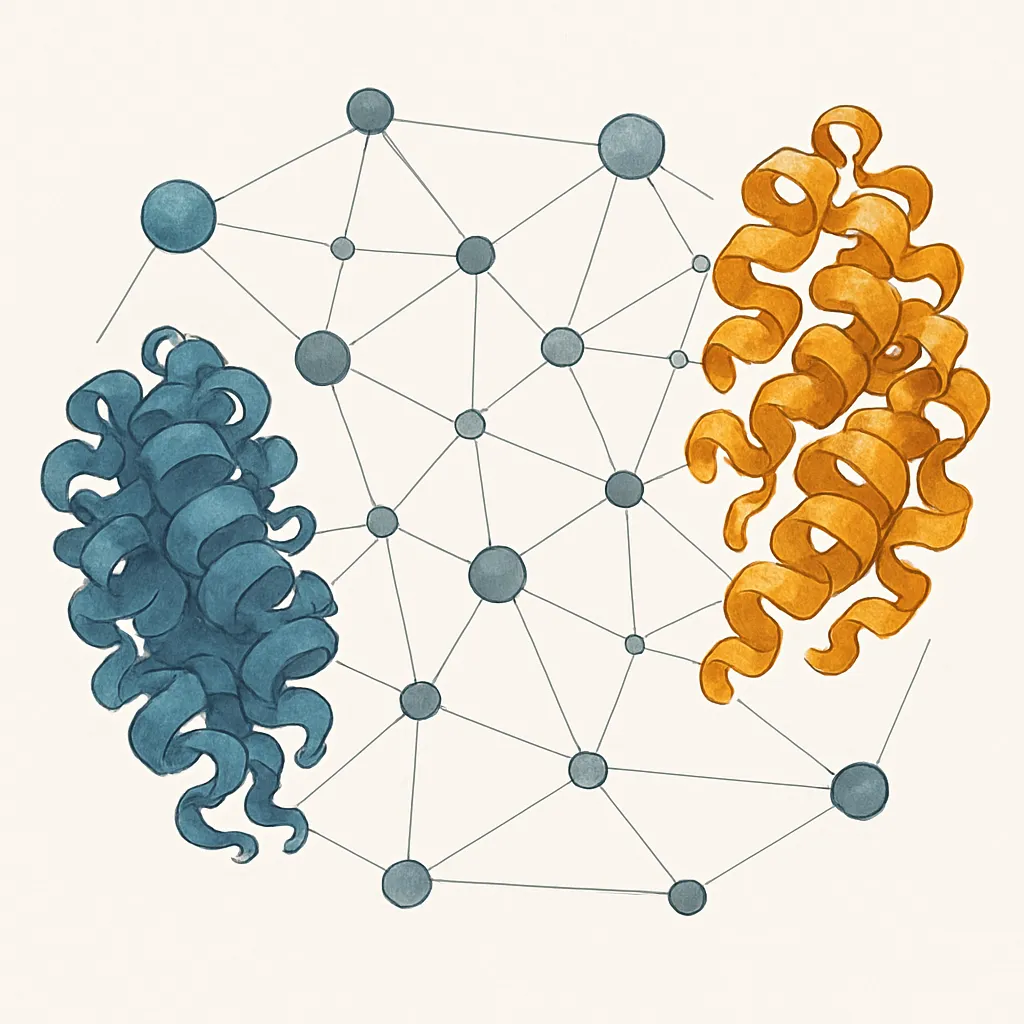
Understanding how proteins interact is essential for revealing the molecular mechanisms that drive life processes. Proteins rarely act alone; instead, they form transient contacts or stable complexes that underpin countless signaling pathways and regulatory networks. Mapping protein–protein interactions (PPIs) not only deepens our systems-level understanding of biology but also provides critical insights for disease research and drug development.
In this article, we compare two widely used approaches for PPI detection:Yeast Two-Hybrid (Y2H) and Affinity Purification–Mass Spectrometry (AP-MS/AC-MS). We also highlight how customized yeast libraries can support large-scale discovery projects.
Y2H is one of the most established molecular genetics techniques for studying PPIs. It relies on reconstitution of a transcription factor in yeast to reveal interactions between a “bait” protein and potential “prey” proteins from a library.
Construct a yeast cDNA or ORF library
Clone bait protein into a suitable vector
Test for bait auto-activation
Screen for interacting partners from the library
Sequence and analyze positive clones
Perform one-to-one verification
Detects direct binary interactions in living cells
Reflects interactions under near-physiological conditions
Intuitive and highly reproducible results (colonies visible by eye)
Broad species applicability
Suitable for high-throughput screening of PPI networks
No protein extraction required, minimizing artifacts
Time-consuming workflow and longer project cycles
Requires strict aseptic operations
Post-translational modifications may differ from higher eukaryotes
AP-MS involves affinity-tagging or antibody-based enrichment of bait proteins from cell extracts, followed by MS identification of co-purified partners. Originally developed in yeast, AP-MS is now widely applied in mammalian systems. Plant applications, however, are more limited due to low protein abundance and tag compatibility challenges.
Generate expression vector with tagged bait protein
Transfect into target cells or tissues
Prepare cell extracts and confirm expression (e.g., Western blot)
Perform tandem affinity purification and proteolytic digestion
Identify co-purified proteins by MS
Captures both direct and indirect interactors within complexes
Provides a snapshot close to physiological conditions
Enables large-scale, automated PPI network studies
Protein complexes may dissociate during extraction
Less suitable for membrane or nuclear proteins
Cannot always distinguish direct from indirect interactors
Purification stringency can influence false positives/negatives
Y2H is optimal for discovering direct, binary PPIs and mapping protein domains. It is especially powerful when coupled with comprehensive yeast libraries to identify novel interaction partners.
AP-MS is better suited for complex interactomes and capturing physiologically relevant networks in mammalian systems, though more technically demanding.
At Omics Empower, we provide custom yeast libraries and screening services to accelerate discovery of protein interactions. Our expertise includes library construction, one-to-one verification, and downstream data analysis—helping researchers achieve reliable, publication-ready results.
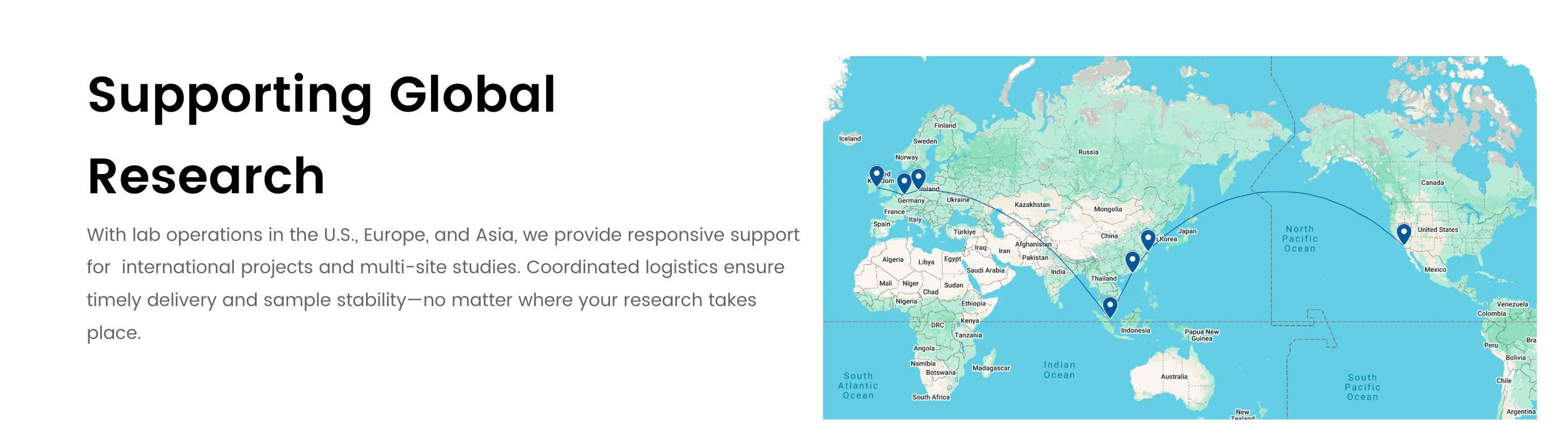
Germany: Arnold-Graffi-Haus / D85 Robert-Rössle-Straße 10 13125 Berlin
United States: (CA) 2 Goddard, Irvine, CA 92618 • (IL) 8255 Lemont Rd, #1, Darien, IL 60561
Hong Kong: Room 618, Building 6, Phase One, Hong Kong Science Park, No. 6 Science Park West Avenue, Pak Shek Kok, New Territories, Hong Kong
Germany: Arnold-Graffi-Haus / D85 Robert-Rössle-Straße 10 13125 Berlin
United States: (CA) 2 Goddard, Irvine, CA 92618 • (IL) 8255 Lemont Rd, #1, Darien, IL 60561
Hong Kong: Room 618, Building 6, Phase One, Hong Kong Science Park, No. 6 Science Park West Avenue, Pak Shek Kok, New Territories, Hong Kong
Germany: Arnold-Graffi-Haus / D85 Robert-Rössle-Straße 10 13125 Berlin
United States: (CA) 2 Goddard, Irvine, CA 92618 • (IL) 8255 Lemont Rd, #1, Darien, IL 60561
Hong Kong: Room 618, Building 6, Phase One, Hong Kong Science Park, No. 6 Science Park West Avenue, Pak Shek Kok, New Territories, Hong Kong

 EN
EN
 de
de