
Single-cell sequencing has transformed the way researchers study cellular heterogeneity, enabling high-resolution analysis of complex tissues, rare cell populations, and dynamic biological states. But in many projects, sequencing all dissociated cells is not the most efficient strategy.
When the population of interest is rare, fragile, or easily masked by background cells, an enrichment step before library preparation can make a meaningful difference. The right cell sorting method can improve signal detection, reduce sequencing waste, and increase the likelihood of generating biologically informative data.
In this article, we compare three widely used cell enrichment approaches for single-cell sequencing: MACS (Miltenyi Biotec), EasySep (STEMCELL Technologies), and fluorescence-activated cell sorting (FACS). Each has its strengths and trade-offs, and the best choice depends on your experimental goal, sample type, and target cell characteristics.
The MACS system from Miltenyi Biotec is among the most established magnetic cell sorting platforms. It uses superparamagnetic nanoparticles (~50 nm) conjugated directly to antibodies. Cells labeled with these magnetic beads are passed through a MACS column placed in a strong magnetic field. The column matrix amplifies the magnetic field up to 10,000-fold, retaining labeled cells while unlabeled cells flow through.
Key advantages:
High purity and recovery (>90% for positive selection of moderately abundant populations)
Gentle on cells, preserving viability and transcriptional state
No need for expensive or complex instrumentation
Well-suited for positive selection of target cells
Limitations:
Purity declines when target cells are very rare (<5–10%)
Negative selection can sometimes compromise viability or introduce debris
Not ideal for multiparameter sorting with multiple antibodies
In practice, MACS works well when the goal is to enrich a biologically meaningful population efficiently without introducing the operational complexity of FACS.

STEMCELL Technologies’ EasySep system is another widely used magnetic cell isolation platform. Unlike column-based MACS workflows, EasySep uses a column-free format, allowing labeled cells to be separated in a tube using a magnetic rack.
This system is especially attractive for workflows based on negative selection, where unwanted cell populations are removed and the target cells remain unlabeled. For single-cell sequencing, this can be useful when researchers want to preserve a more native cell state and minimize the risk of activation caused by direct antibody binding.
Key advantages:
Simple, fast workflow (15–30 min)
Column-free operation reduces mechanical stress, ideal for fragile cells
Negative selection leaves target cells unlabeled—“untouched” and in a more native state
High recovery, especially useful for precious samples
Limitations:
Purity can be lower when isolating extremely rare populations
Works best with its own reagent system
For researchers prioritizing speed, recovery, and minimal perturbation, EasySep can be a strong alternative to column-based magnetic sorting, particularly in immune cell-focused single-cell studies.

Comparison of Magnetic Sorting Systems
Feature | ||
Principle | Direct antibody-coupled magnetic beads | Indirect labeling via TAC + magnetic nanoparticles |
Format | Column-based | Column-free, tube-based |
Advantages | High purity, versatile, preserves cell state | Fast, gentle, untouched target cells |
Limitations | Requires columns; complex for rare cells | May be less pure for very rare targets |
scRNA-seq compatibility | Excellent; minimal impact on transcriptome | High; ideal for avoiding activation |
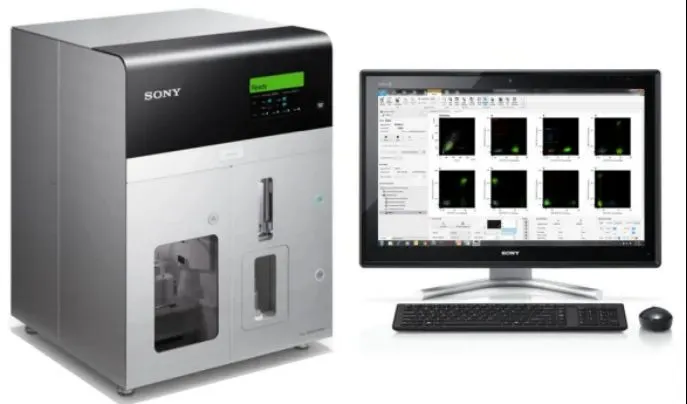
Fluorescence-activated cell sorting (FACS) offers a different level of control. Rather than relying on magnetic capture of cells expressing one or two markers, FACS uses laser-based detection of scatter and fluorescence signals to analyze and sort cells based on multiple characteristics at once.
For researchers considering FACS in more detail, we also put together a practical guide on how to use flow cytometry effectively for single-cell sequencing, including nozzle selection, sample quality, and viability considerations.
Key advantages:
Unmatched multiparameter capability (simultaneous analysis of >10 markers)
Extremely high purity (>99%)
Ability to exclude debris and dead cells using viability dyes
Can sort multiple distinct populations in one run
Limitations:
Requires expensive instrumentation and specialized operators
High pressure and shear stress can affect viability of sensitive cells
Slower throughput, especially for large sample volumes
Higher cost per sample
When purity and phenotypic precision are essential, FACS is often the best option. But that precision comes with greater technical demands, so the method should be chosen based on both biological need and practical feasibility.
Parameter | FACS | Magnetic Sorting |
Principle | Optical properties (scatter + fluorescence) | Antigen-specific magnetic labeling |
Throughput | ~10,000–20,000 cells/sec; slower for large samples | Minutes to 30 min |
Purity | Very high (>99%) | High (>90%) |
Multiparameter capability | Excellent; can analyze dozens of parameters | Limited (1–2 markers) |
Cell viability | Moderate; shear stress may reduce viability | High; gentle handling |
Equipment & cost | High; requires dedicated instrument and expertise | Low; magnetic stand or sorter only |
Complexity | High; compensation, gating, and setup required | Low; standardized protocols |
No single method fits all applications. The best choice depends on your sample type, target cell frequency, experimental goals, and available resources.
Consider MACS when:
Your target population makes up >10% of the sample
You are performing positive selection with a single marker
You want a straightforward, cost-effective workflow with high viability
You plan to process multiple samples in parallel
Consider EasySep when:
You need to isolate untouched, unlabeled target cells (e.g., to avoid activation)
Your sample is from blood, PBMCs, or spleen with clean background
Sample is precious and maximum recovery is critical
You want a fast, column-free workflow
Consider FACS when:
You require very high purity (>99%)
Your panel involves multiple markers or complex gating strategies
You need to sort two or more populations simultaneously
You have access to a FACS instrument and experienced operator
No single method is universally superior. The most suitable choice is the one that matches the biology of the sample and the goals of the study.
In single-cell sequencing, enrichment is closely tied to downstream data quality. A poorly chosen strategy can lead to:
low cell viability,
low recovery of the desired population,
increased ambient RNA background,
wasted sequencing reads,
or biased representation of the underlying biology.
By contrast, a well-matched enrichment workflow can help improve sample quality before library construction, increase the likelihood of capturing biologically relevant cells, and support more interpretable downstream analysis.
This is especially important in studies involving immune subsets, tumor microenvironment profiling, developmental intermediates, or other contexts where small differences in cell composition can change the conclusions of the experiment.
For many researchers, the challenge is not simply choosing between MACS and FACS. It is figuring out how that decision fits into the broader single-cell sequencing workflow.
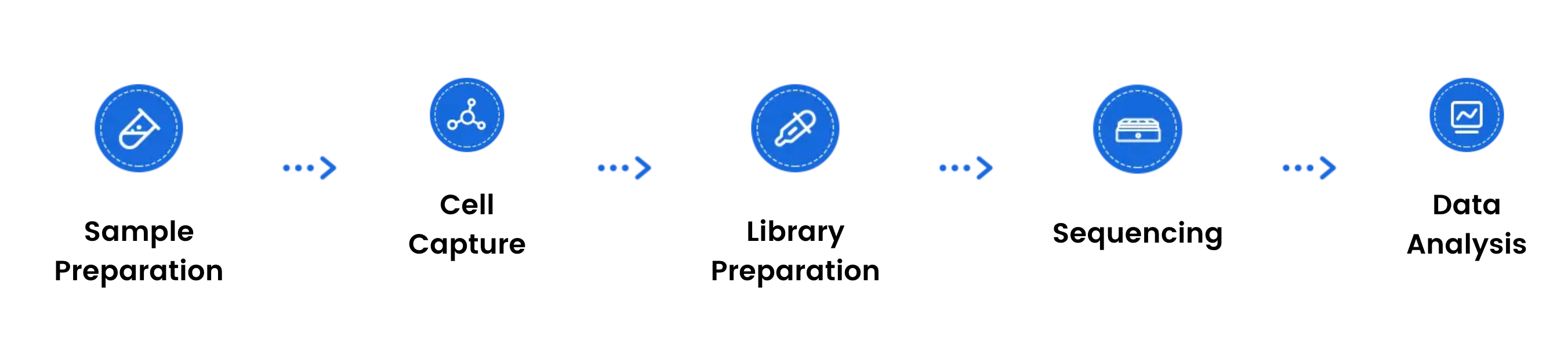
At Omics Empower, we support single-cell sequencing projects from experimental design and sample assessment to cell enrichment strategy planning, library preparation, sequencing, and downstream bioinformatics analysis. If you are unsure whether magnetic sorting or FACS is the better fit for your sample, our team can help evaluate the trade-offs based on your target cells, sample type, and research goals.
If you are planning a single-cell sequencing project, these articles may help you evaluate cell sorting strategies, compare platform options, and optimize your experimental workflow from sample preparation to downstream analysis:
How to Use Flow Cytometry (FACS) Effectively for Single-Cell Sequencing
Comparing Single-Cell Sequencing Platforms: How to Choose the Right Fit for Your Study
Is Cell Subtype Annotation Necessary in Single-Cell RNA Sequencing?
Germany: Arnold-Graffi-Haus / D85 Robert-Rössle-Straße 10 13125 Berlin
United States: (CA) 2 Goddard, Irvine, CA 92618
United States: (IL) 8255 Lemont Rd, #1, Darien, IL 60561
Hong Kong: Room 618, Building 6, Hong Kong Science Park, Pak Shek Kok, Hong Kong
Germany: Arnold-Graffi-Haus / D85 Robert-Rössle-Straße 10 13125 Berlin
United States: (CA) 2 Goddard, Irvine, CA 92618
United States: (IL) 8255 Lemont Rd, #1, Darien, IL 60561
Hong Kong: Room 618, Building 6, Hong Kong Science Park, Pak Shek Kok, Hong Kong
Germany: Arnold-Graffi-Haus / D85 Robert-Rössle-Straße 10 13125 Berlin
United States: (CA) 2 Goddard, Irvine, CA 92618
United States: (IL) 8255 Lemont Rd, #1, Darien, IL 60561
Hong Kong: Room 618, Building 6, Hong Kong Science Park, Pak Shek Kok, Hong Kong

 EN
EN
 de
de